
The Artificial Intelligence (AI) boom has triggered an unprecedented surge in digital content, flooding the world with data and accelerating demand for storage, processing, and energy. Worldwide, a wave of investment is underway to upgrade existing data centres and build new ones, as market reports point to staggering capital requirements to keep pace with AI-driven growth in computing demand.
A McKinsey report from April 2025 estimates that data centres may require up to $6.7 trillion globally to meet rising demand for computing power. Of this, $5.2 trillion would be needed for data centres handling AI workloads, while $1.5 trillion would support facilities powering traditional IT applications. Altogether, nearly $7 trillion in capital expenditure would be required to meet what McKinsey describes as one of the decade’s most critical emerging resource constraints: compute capacity.
According to the 2024 United States Data Centre Energy Usage Report, data centres in the US could account for up to 12% of the country’s total electricity generation by 2028. In 2024, US data centres consumed 183 terawatt-hours (TWh) of electricity, more than 4% of national demand, according to International Energy Agency (IEA) figures. By 2030, electricity consumption is projected to rise by 133%, reaching 426 TWh, or roughly 12% of total US electricity demand. At that level, data centres would rank among the country’s largest single industrial consumers of power.
In Europe, data centre installed power capacity reached 18.7 gigawatts (GW) by the end of 2024 and is expected to rise to 21.3 GW by 2026. By 2030, estimated installed capacity is projected to reach 36 GW, according to S&P Global, placing increasing strain on already constrained regional grids.
How much power is needed?
Meeting the escalating energy requirements of the rapidly expanding data centre market has become one of the defining infrastructure challenges of the coming decade. The power surge driven by generative AI and high-performance computing is pushing electricity grids to their operational and planning limits, often faster than new generation and transmission capacity can be deployed.
A 2024 Deloitte report estimates that the critical power capacity needed to support primary data centre equipment will nearly double between 2023 and 2026, reaching 96 GW. AI workloads alone are expected to account for 40% of this demand. On a global scale, AI-focused data centres are projected to consume around 90 TWh annually by 2026, almost ten times the energy required in 2022.
This rapid increase is closely tied to the high-density hardware required to support AI models, high-performance computing, and large-scale data storage. Modern data centres deploy rows of server racks, each housing multiple servers equipped with central processing units (CPUs) and increasingly power-intensive graphics processing units (GPUs). According to Deloitte, a single high-end GPU consumed approximately 400 watts in 2021, rising to 700 watts in 2023 and reaching roughly 1,200 watts in 2024.
By early 2024, average power demand per rack had exceeded 20 kilowatts (kW), and by 2027 it is expected to reach 50 kW per rack. These trends not only magnify total electricity demand but also undermine grid planning assumptions made only a few years ago. They also intensify the need for advanced cooling systems and storage infrastructure, further increasing the overall energy footprint of data centres.

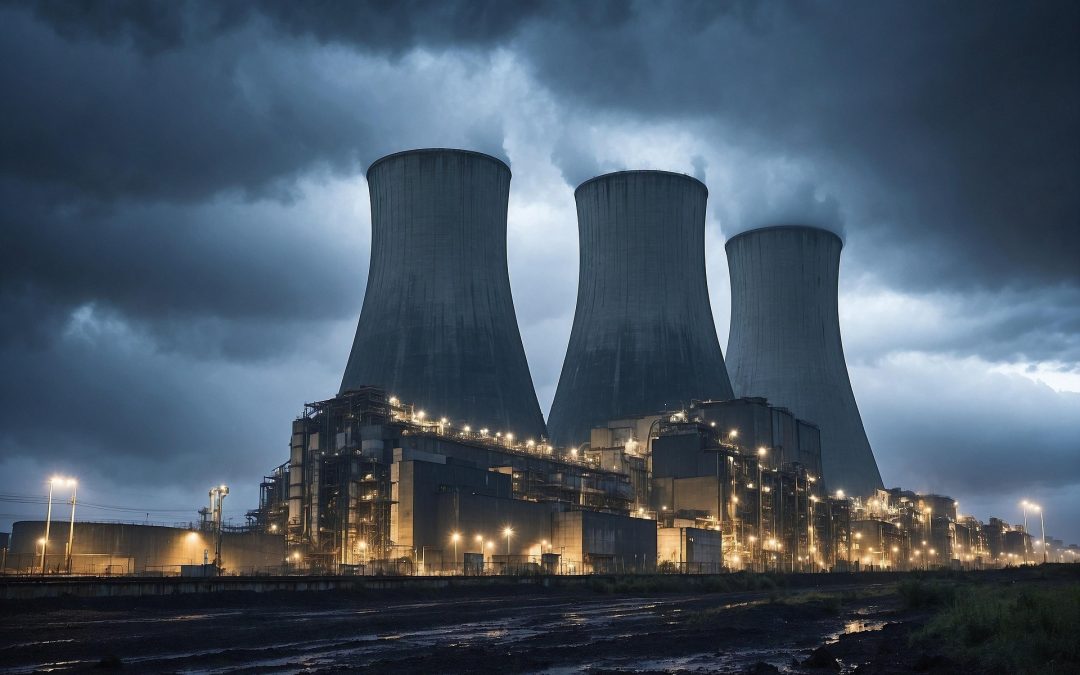
Image: Pixabay.
What are the advantages of deploying nuclear energy for data centres?
Nuclear energy offers several characteristics that align closely with the operational requirements of large-scale data centres.
First, nuclear plants provide continuous, 24/7 baseload power, with minimal exposure to intermittency risks. Compared with many other energy sources, nuclear facilities typically experience lower unplanned downtime, as maintenance schedules are predictable and infrequent. During planned maintenance outages, often lasting several weeks, alternative energy sources can temporarily support operations.
Second, downtime carries exceptionally high costs for hyperscale data centres. Multiple studies estimate that a 24-hour outage at a large facility can result in losses ranging from $7 million to more than $100 million. From this perspective, nuclear power ranks among the most reliable large-scale electricity sources currently available.
Third, next-generation nuclear designs, including advanced light-water reactors (LWRs), small modular reactors (SMRs), and microreactors, are increasingly positioned as flexible options that could complement existing grids. These designs offer modularity, scalability, and the potential for deployment closer to demand centres.
Fourth, nuclear power purchase agreements (PPAs) often provide long-term price stability. While upfront capital and labour costs are substantial, uranium fuel prices represent a relatively small share of total operating costs, reducing exposure to fuel price volatility over time.
With advanced safety features, future nuclear reactors could be located closer to data centre clusters, potentially supporting independent or semi-independent power systems for critical digital infrastructure, industrial facilities, or military installations.
One emerging approach involves reactivating or repurposing existing nuclear facilities and colocating data centres nearby. A notable example is the 20-year power purchase agreement between Microsoft and Constellation Energy to restart Three Mile Island Unit 1. The plant, which has an 800-MW generation capacity, was shut down in 2019 after decades of operation. Although the site is historically associated with the 1979 accident, US regulatory assessments concluded that it did not result in long-term radiological harm to surrounding communities.
And the concerns?
Despite its advantages, nuclear energy faces significant obstacles that limit its ability to scale rapidly enough to meet near-term data centre demand.
Licensing, construction, and deployment timelines for new nuclear reactors remain lengthy, often spanning a decade or more. Even next-generation designs must navigate complex regulatory approval processes, making nuclear a slower solution compared with some conventional or renewable alternatives. As a result, careful coordination with traditional power sources and renewables is essential to avoid delays in data centre development.
Capital costs are another major barrier. The high upfront investment required for nuclear plants has renewed interest in modular reactor designs, which promise lower costs and faster installation, though these benefits have yet to be demonstrated at scale.
Efforts by data centre operators to secure direct access to power generation have also encountered regulatory challenges. In March 2024, Amazon announced a $650 million agreement with Talen Energy to acquire a data centre located adjacent to the Susquehanna Steam Electric Station, with plans to draw power directly from the plant rather than through the public grid. The deal was subsequently put on hold by the Federal Energy Regulatory Commission (FERC), which raised concerns that such arrangements could impose grid maintenance costs on other consumers. The case highlights growing tension between private energy security for hyperscalers and the public responsibility of shared transmission infrastructure.
Fuel supply presents another constraint. Advanced reactors, particularly SMRs, may rely on high-assay low-enriched uranium (HALEU), enriched to 5–20%, compared with the 3–5% used in most conventional reactors. While the US is working to establish a domestic HALEU supply chain, scaling production will take time.
Finally, spent nuclear fuel management remains unresolved. Used fuel must be cooled and stored, typically onsite, and while future reactor designs may reduce waste volumes, long-term disposal solutions are still required.
What should be the power mix?
Nuclear energy emerges as a compelling component of the future data centre power mix, but not a standalone solution. Instead, it is increasingly framed as part of a hybrid system combining nuclear, renewables, conventional generation, and energy storage.
Goldman Sachs projects that data centre power consumption could increase by more than 160% by 2030, pushing AI-related electricity demand in the US to 152 TWh and to 134 TWh across the rest of the world. At the same time, efficiency gains within data centre infrastructure are slowing. As AI workloads expand, diminishing returns on efficiency improvements are contributing to sharp increases in absolute power demand.
Analyses suggest that wind and solar power, when paired with storage, could meet up to 80% of a data centre’s electricity needs. However, constant, 24/7 baseload generation remains necessary to ensure reliability. In this context, the debate is no longer nuclear versus renewables, but how quickly nuclear can be integrated into a diversified energy system without delaying capacity expansion. Goldman Sachs forecasts that 40% of new energy capacity added to support data centres will come from renewables, reinforcing the case for a mixed approach.
The EU perspective: How realistic?
These dynamics raise a central question: how realistic is the emerging energy mix for data centres, particularly in the European Union?
A report by Heinrich Böll Stiftung warns that unchecked market growth may undermine sustainability goals despite efficiency measures. The report identifies structural weaknesses in current EU data centre policy, outlining ten critical areas of concern:
-
The EU must update its forecasts for data centre energy use, as current projections of 98–160 TWh by 2030 likely underestimate AI-driven growth.
-
Efficiency gains have been partially offset by increased demand, a rebound effect that risks undermining sustainability targets.
-
Growing competition for renewable energy could divert limited resources away from communities and other industries.
-
Industry pressure to deploy nuclear energy, particularly SMRs, raises unresolved safety, waste, and equity concerns.
-
Waste heat reuse should not overshadow the need to reduce waste heat generation in the first place.
-
Greater transparency is needed, as current reporting relies on aggregated data that obscures local impacts.
-
Location-based reporting should replace reliance on renewable certificates and offset claims.
-
Stronger incentives and binding requirements are needed to steer investment toward sustainable infrastructure.
-
Software optimisation and the management of unused “dark data” remain overlooked policy blind spots.
Sustainability frameworks should assess whether resource-intensive computing delivers sufficient public value.
Together, these points reflect a broader concern that infrastructure growth is outpacing governance capacity in the EU.
Are SMRs the most realistic solution?
Small modular reactors are increasingly viewed as a potential near-term nuclear option for data centres. A white paper from Schneider Electric highlights SMRs as a serious alternative for facilities struggling with escalating power demand, particularly where grid capacity is constrained.
SMRs offer lower projected costs and shorter construction timelines compared with large conventional reactors. However, they have yet to be deployed at commercial scale, and regulatory and safety frameworks for widespread use remain under development. Standardisation across jurisdictions would be essential to enable safe and resilient deployment, whether onsite or as part of grid infrastructure.
According to a 2024 IAEA report, more than 68 SMR designs are currently in development or early deployment stages worldwide, with operational units already in China and Russia. Individual SMRs typically generate up to 300 MWe, roughly one-third the output of a large nuclear plant—and can be factory-built and transported to deployment sites. Beyond electricity generation, waste heat from SMRs could support district heating, hydrogen production, or industrial processes, improving overall system efficiency. SMRs could also integrate into smaller grids or supply power to rural and weak-grid regions.
Microreactors: a flexible complement to SMRs
Microreactors represent an even smaller and more modular nuclear option, producing between 1 and 20 MW of power. Their compact size and transportability make them suitable for remote locations, off-grid deployments, or specialised high-performance computing clusters requiring dedicated power.
With shorter construction timelines and smaller footprints than SMRs or large nuclear plants, microreactors could complement larger systems by providing scalable, location-specific power solutions. Together, SMRs and microreactors offer a layered nuclear approach to meeting the continuous power demands of AI-driven data centres.

The risks are not just heating or cooling
Energy supply is only one dimension of data centre risk. As nuclear facilities and data centres become increasingly digitalised and potentially co-located, their cybersecurity risk profiles begin to overlap.
A Chatham House report warns that next-generation nuclear reactors will rely heavily on digital control systems, increasing exposure to cyber threats. Past incidents, including the Stuxnet attack on Iran’s Natanz facility in 2010 and the 2014 breach of South Korea’s nuclear systems, demonstrate the potential consequences of cyber-physical attacks.
Stuxnet, a highly sophisticated worm, altered centrifuge operations while feeding operators falsified data, ultimately destroying around 1,000 centrifuges. It remains the first known cyberweapon to cause physical damage to critical infrastructure.
Data centres face similar vulnerabilities. Network-connected devices such as security cameras and cooling systems can serve as entry points for attackers. Data centre infrastructure management (DCIM) tools, if poorly secured, can expose physical systems to compromise. Disruption of operational technology (OT) systems can lead to overheating, power loss, and outages, often exacerbated by default or unchanged passwords.
According to Cyble Research Labs, more than 20,000 DCIM and monitoring systems were publicly accessible in 2022, while over 55% of data centre operators reported outages in 2023. Effective protection requires detailed system mapping and strict network segmentation between IT and OT systems, increasing operational complexity and maintenance demands.
How resistant are nuclear reactors to climate change?
Climate change presents an additional challenge for nuclear power. Many existing reactors were designed using historical climate data that does not reflect the increasing frequency of extreme weather events. A 2024 Austrian government fact sheet highlights concerns over faster-than-expected increases in heatwaves, droughts, and flooding.
While new nuclear facilities can be designed with greater climate resilience, risks remain. Heatwaves and droughts can reduce cooling efficiency, limiting reactor output or forcing temporary shutdowns. Rising sea levels and extreme weather increase flood risks for coastal plants, while water stress affects inland reactors reliant on river cooling. Regulatory limits on water usage and thermal discharge may further constrain operations.
A 2024 study in Energy Strategy Reviews underscores that future nuclear expansion must explicitly incorporate climate adaptation measures, particularly under warming scenarios of 2°C or more. Even advanced reactor designs, including SMRs, cannot fully eliminate climate-related operational risks, underscoring the need for regional planning and resilience assessments.
The AI revolution will not be constrained by algorithms, but by energy. Whether nuclear power becomes the backbone of the digital age, or a bottleneck shaped by cost, regulation, and climate risk, may determine not only how fast AI scales, but who controls its infrastructure, its environmental footprint, and its long-term resilience.
This article was originally published on Substack.
Sources
All in the Difference. (n.d.). Difference between MW and MWe. https://www.allinthedifference.com/difference-between-mw-and-mwe/
Chatham House. (2024, July). Cybersecurity in the civil nuclear sector: Threats and risks to civil nuclear infrastructure. https://www.chathamhouse.org/2024/07/cybersecurity-civil-nuclear-sector/2-threats-and-risks-civil-nuclear-infrastructure
Data Center Knowledge. (n.d.). Cybersecurity risks threaten the physical infrastructure of data centers. https://www.datacenterknowledge.com/cybersecurity/cybersecurity-risks-threaten-the-physical-infrastructure-of-data-centers
Deloitte. (2024). GenAI power consumption creates need for more sustainable data centers. https://www.deloitte.com/us/en/insights/industry/technology/technology-media-and-telecom-predictions/2025/genai-power-consumption-creates-need-for-more-sustainable-data-centers.html
Energy.gov. (n.d.-a). 5 facts to know about Three Mile Island. https://www.energy.gov/ne/articles/5-facts-know-about-three-mile-island
Energy.gov. (n.d.-b). HALEU: High-assay low-enriched uranium. https://www.nrc.gov/materials/new-fuels/haleu
Energy Technology Area, LBNL. (2024). 2024 LBNL data center energy usage report. https://eta.lbl.gov/publications/2024-lbnl-data-center-energy-usage-report
European Commission. (n.d.). Small modular reactors. https://energy.ec.europa.eu/topics/nuclear-energy/small-modular-reactors_en
Forbes Technology Council. (2024, April 10). The true cost of downtime and how to avoid it. https://www.forbes.com/councils/forbestechcouncil/2024/04/10/the-true-cost-of-downtime-and-how-to-avoid-it/
Heinrich Böll Stiftung. (2025, March 19). Towards planet-proof computing: Ten key elements for EU data centre sustainability policy. https://eu.boell.org/en/2025/03/19/towards-planet-proof-computing-ten-key-elements-eu-data-centre-sustainability-policy
McKinsey & Company. (2025, April). The cost of compute: A $7 trillion race to scale data centers. https://www.mckinsey.com/industries/technology-media-and-telecommunications/our-insights/the-cost-of-compute-a-7-trillion-dollar-race-to-scale-data-centers
ScienceDirect. (2024). Energy and AI: Impact on data centres [Journal article]. https://www.sciencedirect.com/science/article/pii/S2211467X24000725
Stuart, T. (n.d.). Stuxnet. In Encyclopædia Britannica. https://www.britannica.com/technology/Stuxnet
Visual Capitalist. (2023). Charted: The energy demand of U.S. data centres 2023–2030P. https://www.visualcapitalist.com/charted-the-energy-demand-of-u-s-data-centers-2023-2030p/
World Nuclear News. (2024). White paper sets out advantages of SMRs for data centres. https://www.world-nuclear-news.org/articles/white-paper-sets-out-advantages-of-smrs-for-data-centres
Gadrilling.com. (n.d.). Baseload power. https://www.gadrilling.com/glossary/baseload-power
International Atomic Energy Agency (IAEA). (2024). Advances in small modular reactor technology [PDF]. https://www-pub.iaea.org/MTCD/Publications/PDF/p15790-PUB9062_web.pdf
BMLUK (Austrian Federal Ministry). (2024). Effects of climate change on nuclear power plants [Fact sheet]. https://www.bmluk.gv.at/dam/jcr%3A7af204d2-75b6-4e26-ad28-1195fd0eab64/Factsheet%20Effects%20of%20climate%20change%20on%20nuclear%20power%20plants_UA.pdf
Pew Research Center. (2025, October 24). What we know about energy use at US data centres amid the AI boom. https://www.pewresearch.org/short-reads/2025/10/24/what-we-know-about-energy-use-at-us-data-centers-amid-the-ai-boom/
Wikipedia. (n.d.). Three Mile Island Nuclear Generating Station. https://en.wikipedia.org/wiki/Three_Mile_Island_Nuclear_Generating_Station