
Can AI Save a Million Hectares from Flames Every Year?
Climate change is pummeling us, quite literally. Europe is facing record-breaking heatwaves while forests are ablaze from corner to corner, stretching into Turkey. Worsened by human negligence and selfishness, the lungs of nature burn continuously as humanity searches for a concrete solution, fast. One of the most promising tools emerging is artificial intelligence (AI), which is now being used to fight forest fires and even deter the treacherous act of arson.
Summer wildfires are among the deadliest events for nature and most destructive for humanity in the fight against climate change. In the last ten years, the area lost to forest fires has increased by 5.4% in Europe, with 2022 and 2023 being the most severe years, with nearly 1.5 million hectares of land lost to wildfires. Although 2024 has been less severe, it still ended up above the 10-year average for the European Union (EU), with approximately 420,000 hectares lost, according to the EU’s Joint Research Centre. The EU’s European Forest Fire Information System (EFFIS) reports that as of mid-July 2024, around 232,000 hectares have already burned, almost the size of Luxembourg.
Turkey experienced 27,150 forest fires between 2012 and 2021, resulting in the loss of approximately 230,000 hectares of land. Of this, around 140,000 hectares were lost in large-scale fires, according to the Anadolu Agency. In 2020 alone, the causes of fires included:
- Cigarette butts (45)
- Fires started by shepherds (49)
- Arson (30)
- Hunting activities (4)
- Picnics (24)
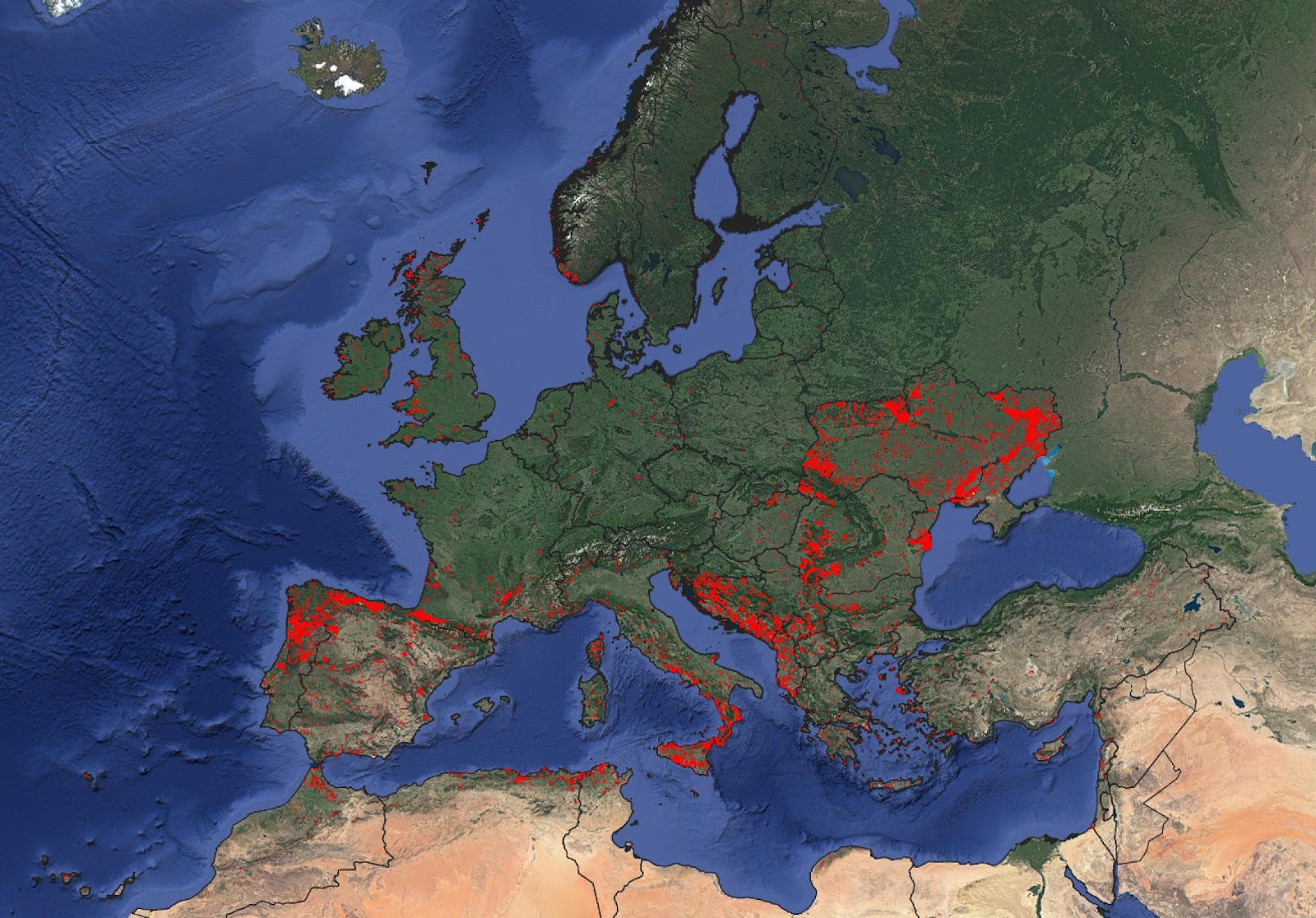
Map of the EU 2022 wildfire season. Image: European Commission, Joint Research Centre (JRC)
These are primarily human errors, but many know well that some fires are intentionally set, exploiting heatwaves and worsening climate change for deeply selfish reasons.
Forest fires clearly highlight human error magnified by self-interest, revealing a lack of regard for the values that should prioritise the natural world. That might be the reason we need AI more than we realise, not only to monitor and predict fires, but to help stop the human hand that lights them.
Wildfires have overwhelming consequences: they set back climate efforts by years, destroy habitats, and release massive amounts of carbon into the atmosphere. Deforestation contributes 12–20% of global greenhouse gas emissions by reducing nature’s carbon-holding capacity, while wildfires contribute significantly to atmospheric CO2.
How is AI going to help us?
Just like its role in predicting extreme weather events, AI is being applied to fight forest fires, starting with early smoke and hotspot detection. One of the first and most widely recognised implementations is in California. The ALERTCalifornia system scans feeds from over 1,000 PTZ (pan-tilt-zoom) cameras, capable of moving in four directions and zooming in or out, and can alert officials immediately upon detecting smoke anomalies.
High-resolution AI cameras are also mounted on cellular towers, offering better vantage points and network coverage. These systems detect smoke even through fog or haze, and even at night. In several U.S. states and Australia, Pano AI has deployed such cameras with notable success.
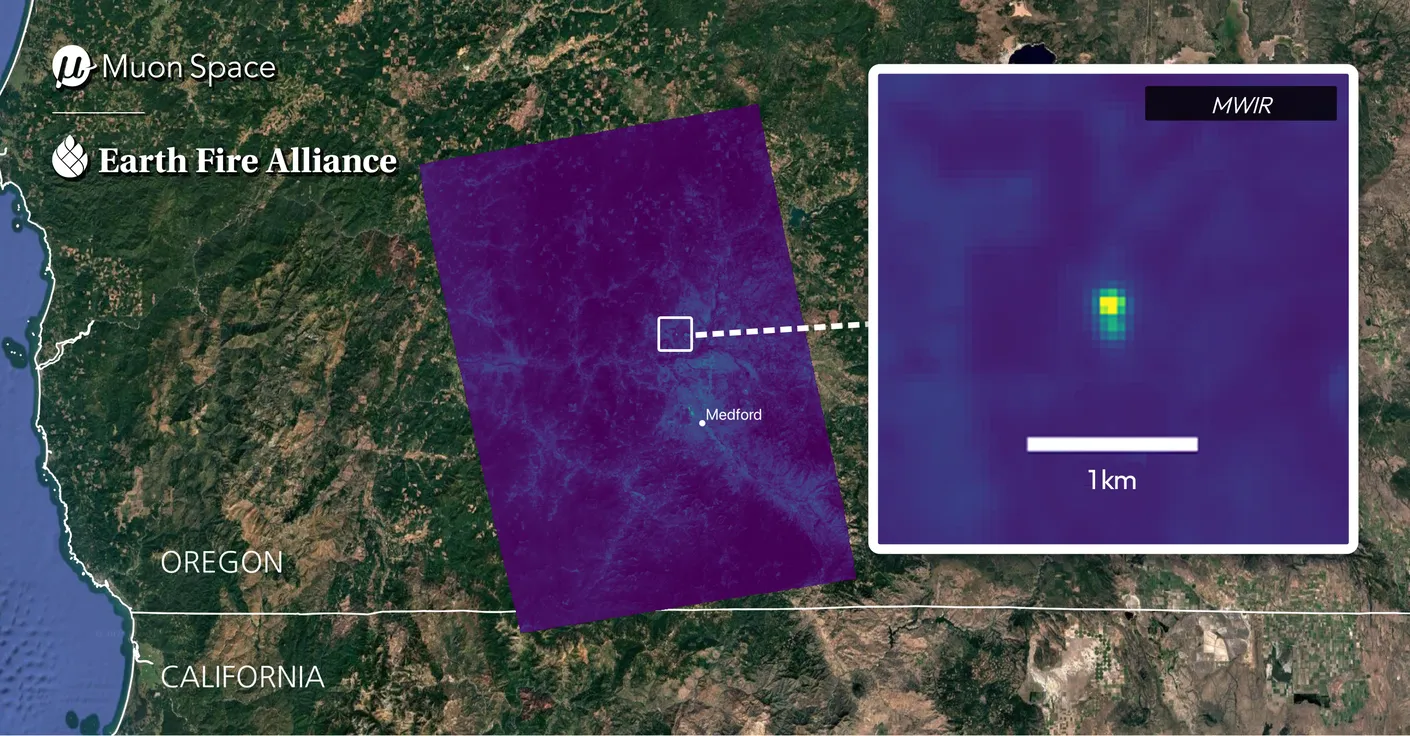
Muon Space and Earth Fire Alliance.
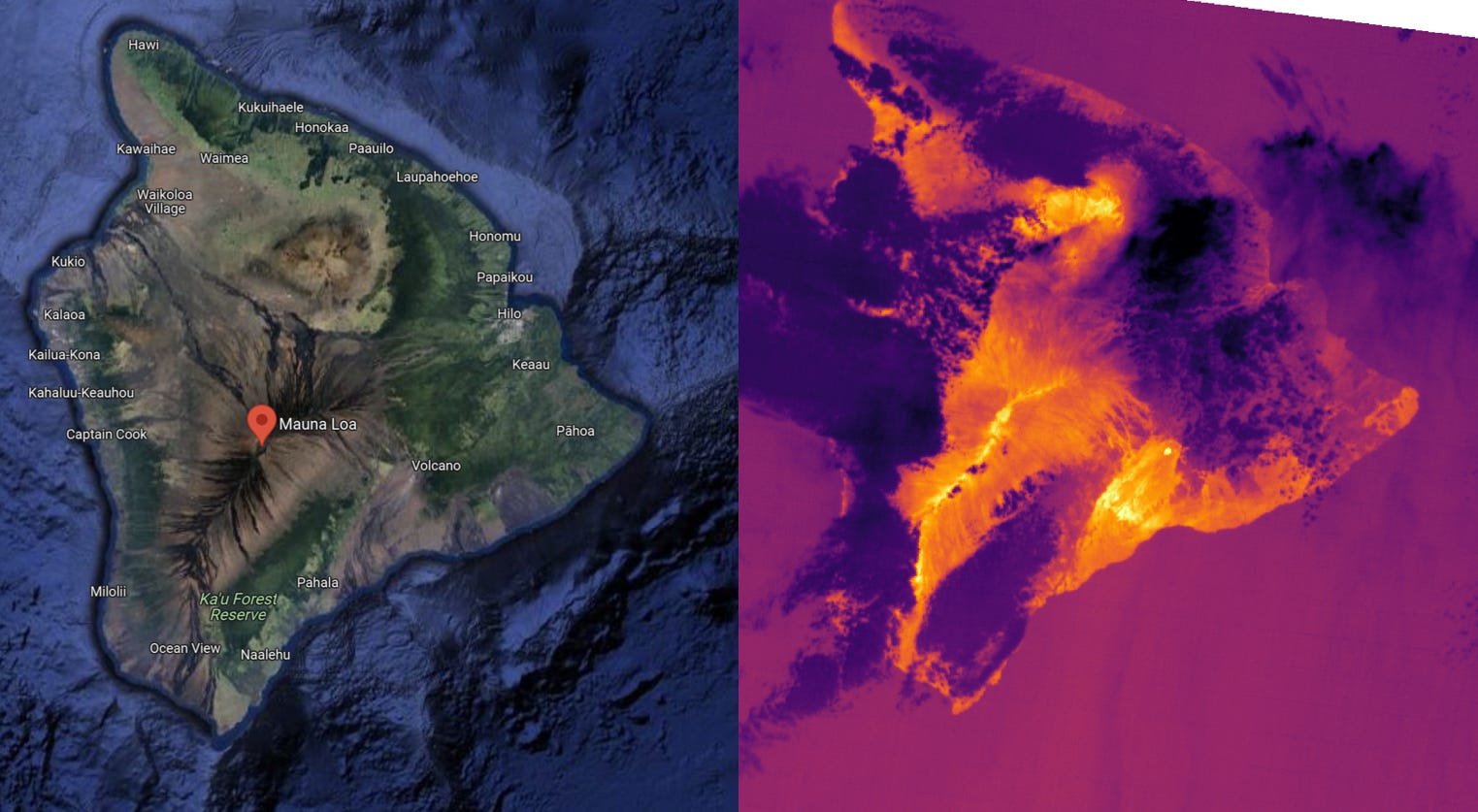
Taking solutions beyond ground level, satellites now play a vital role. Germany-based OroraTech, a leader in global wildfire monitoring, deploys thermal-infrared AI CubeSats that detect hotspots in near real time, including remote regions. Supported by Earth Fire Alliance and Google, the FireSat initiative has just released its first images of a fire detected from space. With a network of satellites equipped with multispectral AI cameras, the system delivers global fire alerts approximately every 20 minutes.
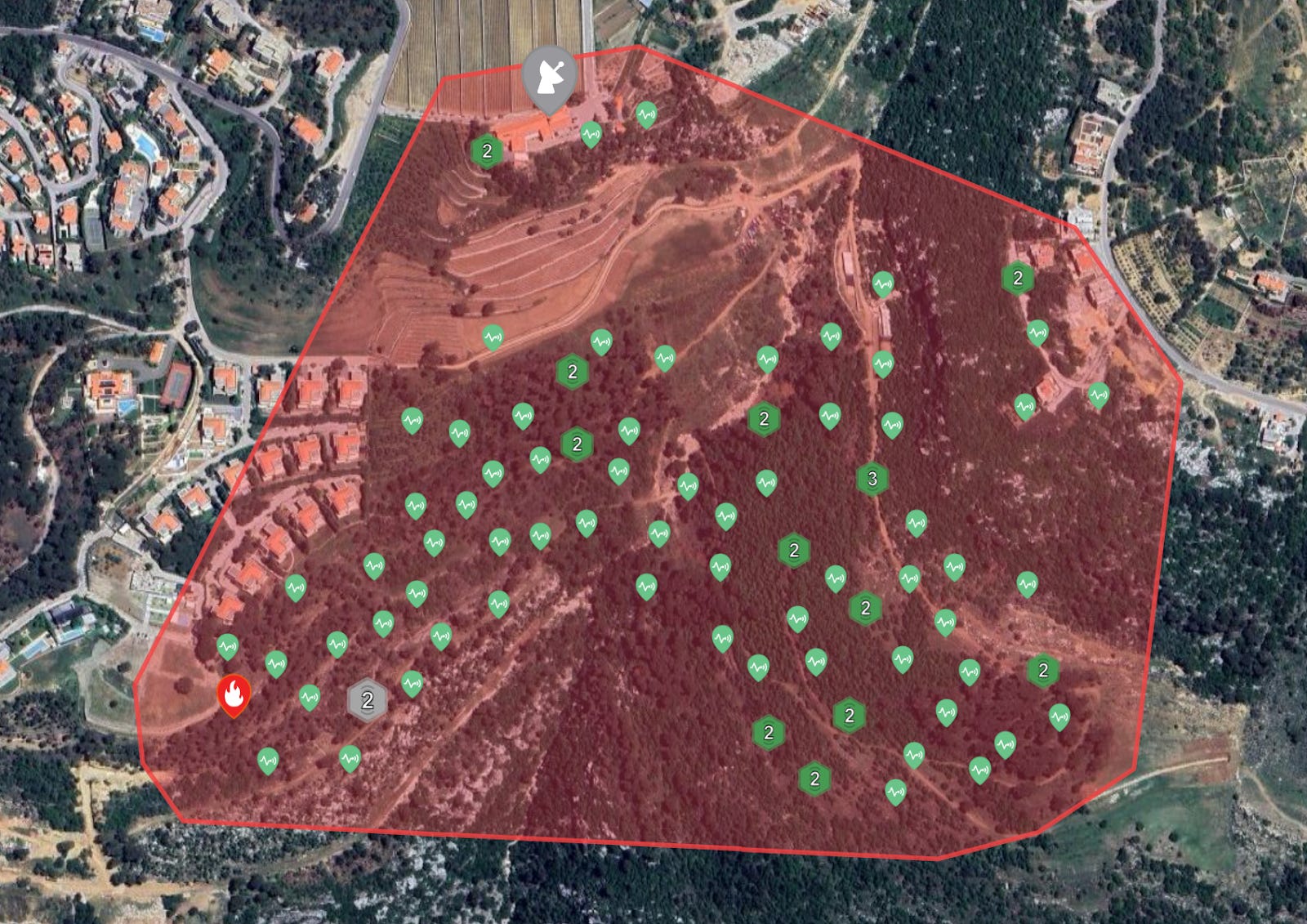
Another German company, Dryad Networks, offers “ultra-early wildfire detection” by combining two technologies: Silvanet (solar-powered gas sensors) and Silvaguard (autonomous AI drones delivering IR and optical video images to firefighters). Meanwhile, U.S.-based Data Blanket is developing autonomous AI drones to detect and monitor wildfires on the ground.
In Turkey, which recently lost 10 firefighters and rescue workers to a forest fire in Eskişehir, the FireAId project, supported by the World Economic Forum, was launched in 2023 as a pilot to map and predict wildfires. Another key project is FireCNN, developed by Finland’s Aalto University, which aims to reduce wildfires in Indonesia’s peatlands by up to 76%.
What will be the long-term advantages?
-
Super-fast detection and response compared to human monitoring
-
Automated analysis of vast amounts of camera and sensor data, reducing the need for human intervention
-
Satellite and drone coverage of large and remote areas unreachable by ground teams
-
Machine learning systems that can distinguish smoke from non-fire events, supporting more accurate decisions
-
Predictive insights that optimise resource allocation and allow proactive action
Currently, AI is trained on trillions of satellite pixels and sensor data, offering up to 92% early detection accuracy while reducing false alarms by 40%. Autonomous quadrotors can scan up to 240 hectares per flight. Remote-operated bulldozers and crewless aircraft can deliver tons of fire suppressants, minimising risk to human lives. Technologies like the K-MAX autonomous heavy-lift helicopter (developed by Kaman and Lockheed Martin for military use) are being adapted to fly over dense smoke zones and drop up to 2,700 kg of suppressants.
From smart cameras and sensor networks to the next generation of robotic AI firefighting drones, the battle against wildfires could represent a leap forward for tech in the fight against climate change, and a boost in our collective motivation.
What about arson?
AI smoke detection systems are built for early warning, whether the fire is human-caused or not. Early detection can be a strong deterrent to arsonists. In addition, risk prediction models can highlight human-prone high-risk zones, aiding prevention.
However, AI currently does not detect the act of arson itself; it detects fires. This means human teams are still needed to monitor and investigate. But with better allocation of resources enabled by AI, ground units can more effectively catch arsonists and help deter future crimes.
Ultimately, AI-driven mapping, modelling, and prediction will significantly reduce fire-damaged areas. FireCNN can reduce wildfires by 50–76%, while FireAId offers up to 80% accurate fire risk predictions 24 hours ahead. Dryad Networks aims to prevent 3.9 million hectares of forest loss and 1.7 billion tonnes of CO2 emissions by 2030 through global implementation.
To make future summers cooler and more livable, we need AI-based wildfire prevention now more than ever.
This article was originally published on Substack.
Sources:
European Commission, Joint Research Centre. (2023, November 22). Wildfires in the EU: 2022 was the second worst year – a warning from a changing climate. https://joint-research-centre.ec.europa.eu/jrc-news-and-updates/wildfires-eu-2022-was-second-worst-year-warning-changing-climate-2023-11-22_en
European Commission, Joint Research Centre. (2024, April 10). Wildfires in 2023 among the worst in the EU this century. https://joint-research-centre.ec.europa.eu/jrc-news-and-updates/wildfires-2023-among-worst-eu-century-2024-04-10_en
European Commission, Joint Research Centre. (2025, March 25). Ukraine hit by record-breaking wildfires in 2024. https://joint-research-centre.ec.europa.eu/jrc-news-and-updates/ukraine-hit-record-breaking-wildfires-2024-2025-03-25_en
Copernicus Climate Change Service. (2024). European State of the Climate 2023: Wildfires. https://climate.copernicus.eu/esotc/2023/wildfires
World Resources Institute. (n.d.). Global Forest Review: Deforestation trends. https://gfr.wri.org/latest-analysis-deforestation-trends
FIRE-RES Project. (2024). Wildfires in 2024: Key trends from the JRC advance report and the EU’s leading role in prevention and innovation. https://fire-res.eu/wildfires-in-2024-key-trends-from-the-jrc-advance-report-and-the-eus-leading-role-in-prevention-and-innovation/
Anadolu Agency. (2020). Son 10 yıldaki orman kaybının yüzde 61,5’i geçen yılki yangınlarda yaşandı. https://www.aa.com.tr/tr/yesilhat/dogal-yasam/son-10-yildaki-orman-kaybinin-yuzde-61-5i-gecen-yilki-yanginlarda-yasandi/1815014
Medyascope. (2021, July 30). Türkiye’nin orman yangınları bilançosu: Son beş yılda 16 binden fazla yangın çıktı, İstanbul’un 10’da biri kadar ormanlık alan yok oldu. https://medyascope.tv/2021/07/30/turkiyenin-orman-yanginlari-bilancosu-son-bes-yilda-16-binden-fazla-yangin-cikti-istanbulun-10da-biri-kadar-ormanlik-alan-yok-oldu/
Grantham Research Institute on Climate Change and the Environment. (n.d.). What is REDD+ and will it help tackle climate change? London School of Economics. https://www.lse.ac.uk/granthaminstitute/explainers/whats-redd-and-will-it-help-tackle-climate-change/
Euronews Green. (2025, July 18). Wildfires in Europe burn area the size of Luxembourg as 2025 shapes up to be an extreme year. https://www.euronews.com/green/2025/07/18/wildfires-in-europe-burn-area-the-size-of-luxembourg-as-2025-shapes-up-to-be-an-extreme-ye
World Economic Forum. (n.d.). FireAid: Harnessing AI to predict and prevent wildfires. https://initiatives.weforum.org/the-adaptation-and-resilience-network/fireaid-harnessing-ai
Earth Fire Alliance. (n.d.). Official website.
https://www.earthfirealliance.org/
Google. (2024). First FireSat images: Wildfire detection from space. https://blog.google/technology/research/first-firesat-images/
World Economic Forum. (2023, September). AI model could help prevent wildfires. https://www.weforum.org/stories/2023/09/ai-model-prevent-wildfires/
Aalto University. (n.d.). New AI system predicts how to prevent wildfires. https://www.aalto.fi/en/news/new-ai-system-predicts-how-to-prevent-wildfires
Asia Pacific Fire Magazine. (n.d.). Protecting the world’s forests from wildfires with AI. https://apfmag.com/protecting-the-worlds-forests-from-wildfires-with-ai/