
Three Years and Counting: How AI Might Help Us Delay Climate Collapse
We have three years. Can AI help us beat the clock? A new report says we’re just three years from crossing the 1.5°C threshold. But AI might help us gain time.
A Global Deadline Approaches
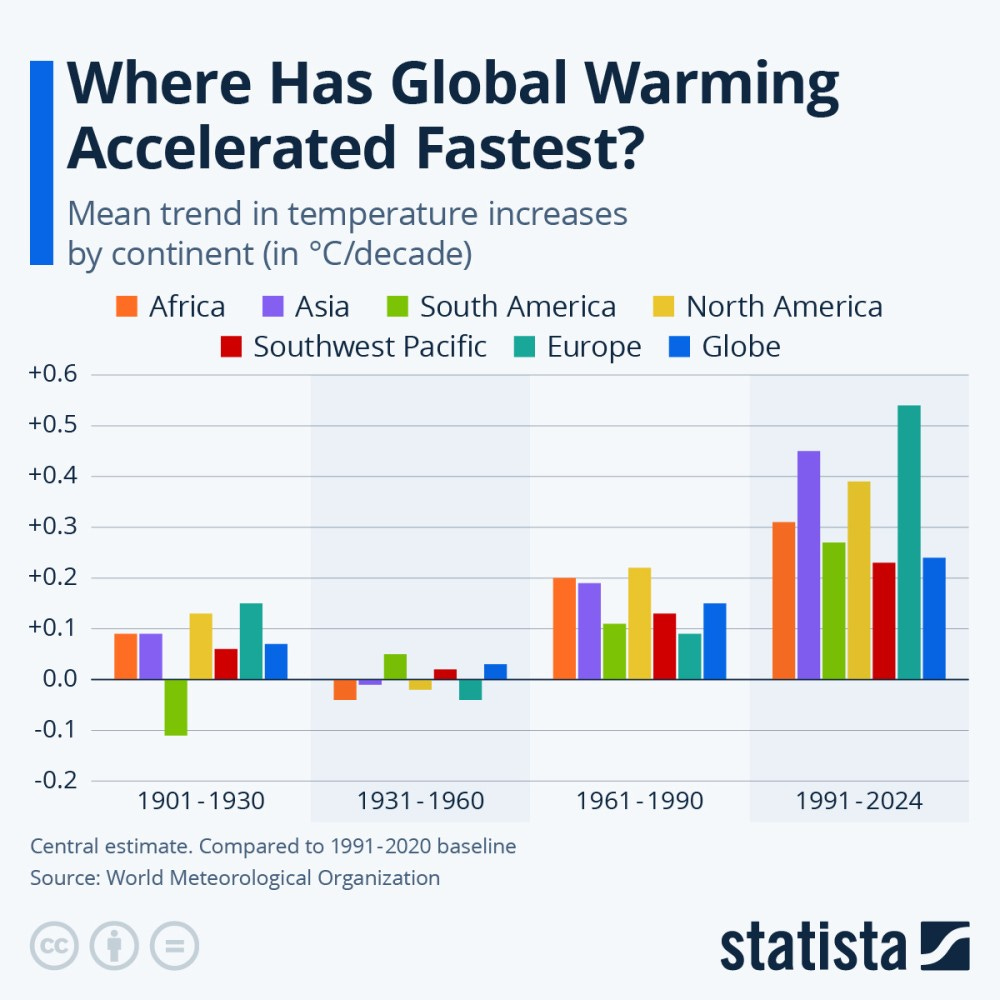
According to a report published in Earth System Science Data (June 2024), the world has only three years before reaching the 1.5°C warming threshold set in the Paris Agreement. As Europe experiences unprecedented heat waves, the report sounds another urgent alarm: time is running out to reverse the course of global warming.
The world has already warmed by 1.2°C compared to the pre-industrial average. While the planet has been heating up, the oceans have absorbed much of this excess heat. Even if we halted all emissions today, the oceans would continue releasing that heat for decades, potentially adding another 0.5°C of warming. The heat would eventually radiate into space, and in a few thousand years, the Earth might return to pre-industrial temperatures, if nature reabsorbs excess CO₂, according to the National Oceanic and Atmospheric Administration (NOAA).
- Only 143 billion tons (130 billion metric tons) of CO₂ emissions remain before exceeding the 1.5°C threshold (Earth System Science Data).
- Humanity emits about 46 billion tons (42 billion metric tons) of CO₂ annually (World Meteorological Organisation).
What Can AI Do About It?
Climate change and rising temperatures will place immense pressure on global populations. The World Health Organisation (WHO) estimates that between 2030 and 2050, climate impacts could cause an additional 250,000 deaths annually due to undernutrition, malaria, diarrhoea, and heat stress.
While some radical solutions, like bombarding the Arctic with artificial snow or covering it in reflective silica microspheres (as suggested by the Arctic Ice Project), remain futuristic, AI offers practical tools that are already making a measurable difference.
Accelerating Climate Monitoring with AI
One breakthrough came in 2023, when the University of Leeds developed a neural network capable of analysing iceberg changes in 0.01 seconds, 10,000 times faster than human analysis. This AI system was trained using Sentinel-1 satellite images and enables near real-time monitoring of ice loss (ESA).
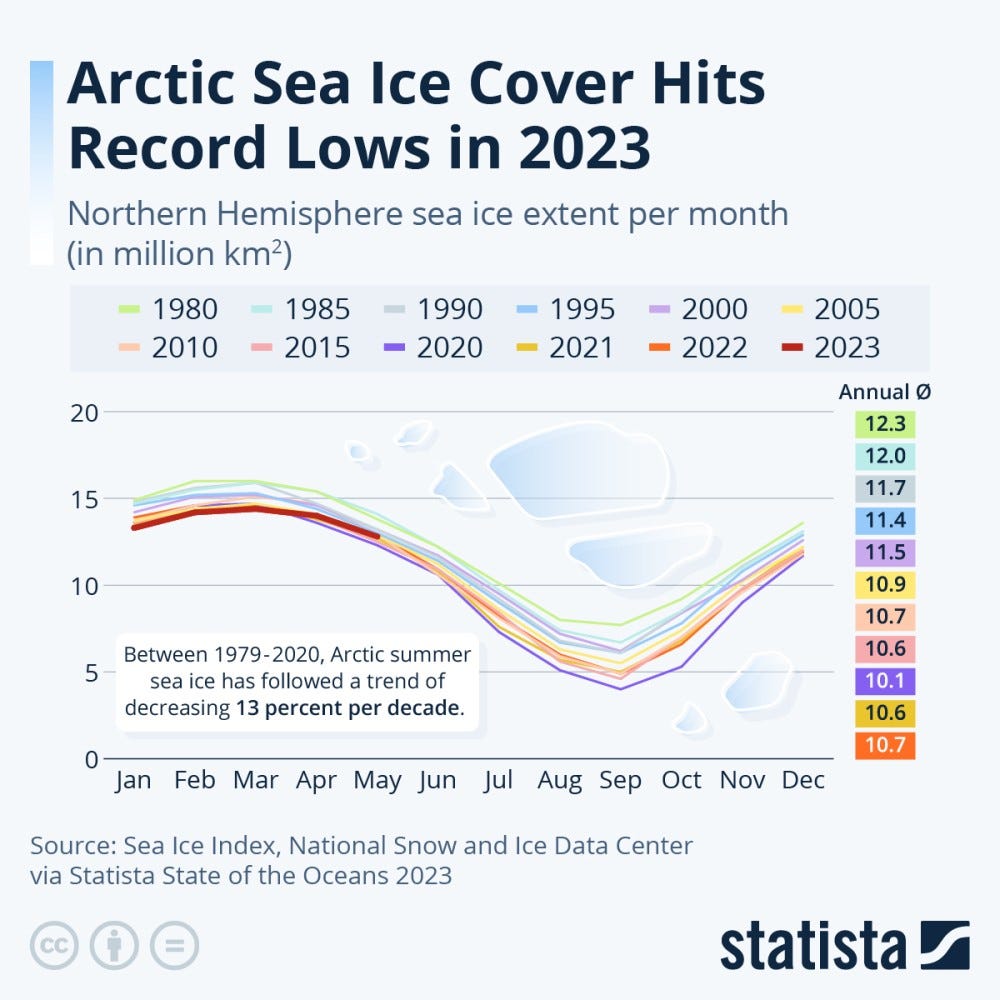
According to Earth.org, the world has lost 28 trillion tons of ice since the 1990s, with a daily melt rate of 1.2 trillion tons per year as of 2022.
Another AI-driven project, Space Intelligence, has mapped over 1 million hectares of forest across 30 countries. It tracks metrics such as carbon storage and deforestation, helping policymakers and conservationists make better decisions.
AI in Ocean Cleanup and Plastic Tracking
The nonprofit The Ocean Cleanup, led by Dutch innovator Boyan Slat, has removed over 20 million kilograms of plastic from oceans and rivers since operations began in 2018. AI mapping tools have boosted plastic collection efficiency by 60%, helping the team target high-density debris using images captured by drones and ships (The Ocean Cleanup, Phys.org).
Big Tech’s Role in AI-Driven Climate Action
Google: From Green Routing to Modular Nuclear Power
Google predicts that AI could help reduce 5–10% of global emissions by 2030, roughly equal to the EU’s total annual emissions. Its efforts include:
-
Green routing in Google Maps, saving 2.4 million metric tons of CO₂ since 2021 by suggesting fuel-efficient routes.
-
Flood Forecast Hub, providing real-time flood alerts in over 80 countries, reaching 460 million people.
-
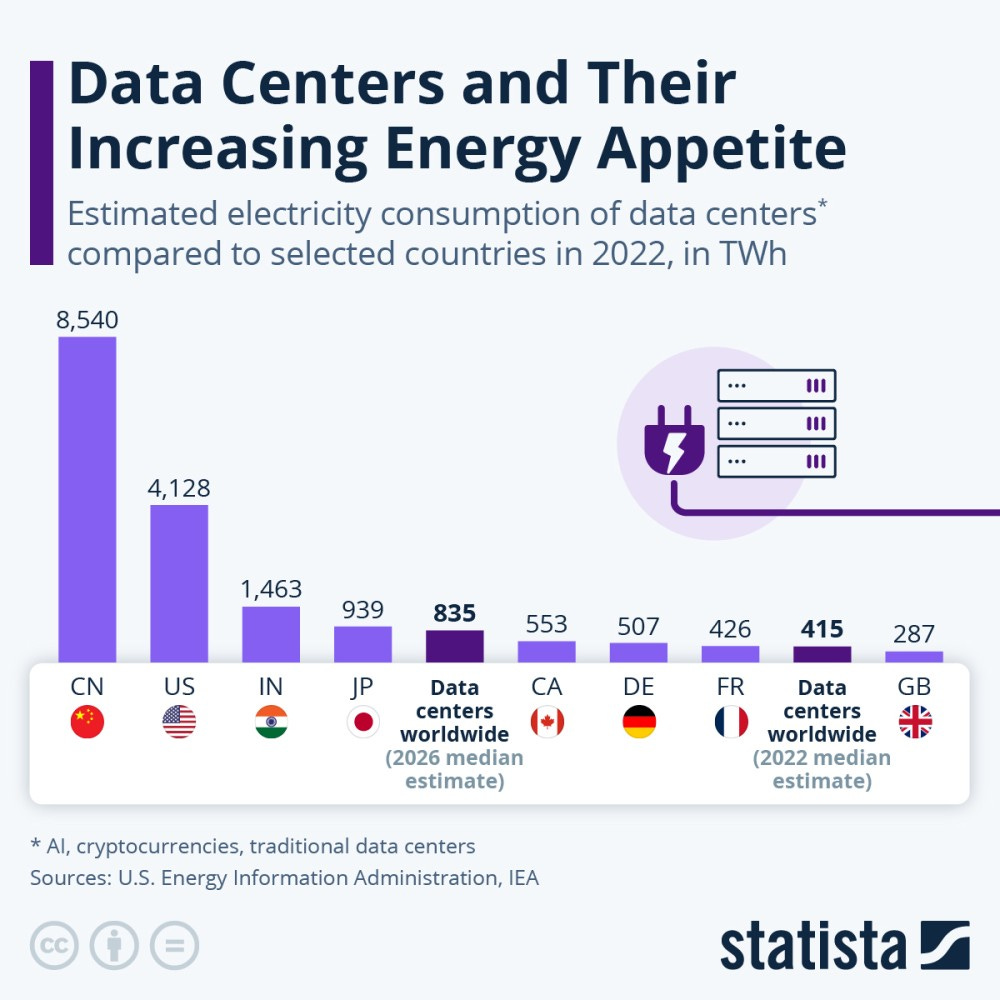
Cutting energy and emissions in AI data centres: Google reports its custom hardware has made AI workloads 100× more energy efficient, lowering emissions 1,000×.
-
In May 2025, Google partnered with Elementl Power to develop modular nuclear sites that can generate up to 600 MW each, designed to support the power needs of AI while minimising carbon emissions.
NVIDIA: Climate Forecasts in Seconds
In 2024, NVIDIA launched its Earth-2 Cloud APIs, and Taiwan became the first country to adopt them. These models predict extreme weather events using diffusion-based AI, offering 12.5 times higher resolution, 1,000 times faster speeds, and 3,000 times more energy efficiency than conventional numerical models (NVIDIA).
Its FourCastNet 3 model can generate a 15-day global weather forecast in just 64 seconds, using a fraction of the energy traditional systems consume.
Microsoft: AI for Earth and Carbon Removal
Microsoft’s AI for Earth program supports over 950 environmental projects worldwide. In a more radical move to offset AI’s carbon footprint, Microsoft signed a $1.7 billion deal to bury 4.9 million tons of manure underground over 12 years, a novel form of carbon sequestration (Windows Central).
AI Might Buy Us More Time
If current emissions continue, we could surpass the 1.5°C warming threshold by 2029. However, AI’s ability to accelerate environmental monitoring, optimise infrastructure, and support new clean technologies could buy us critical time.
The real question isn’t whether AI can help; it’s whether we’ll act fast enough to use it wisely.
This article was originally published on Substack.